
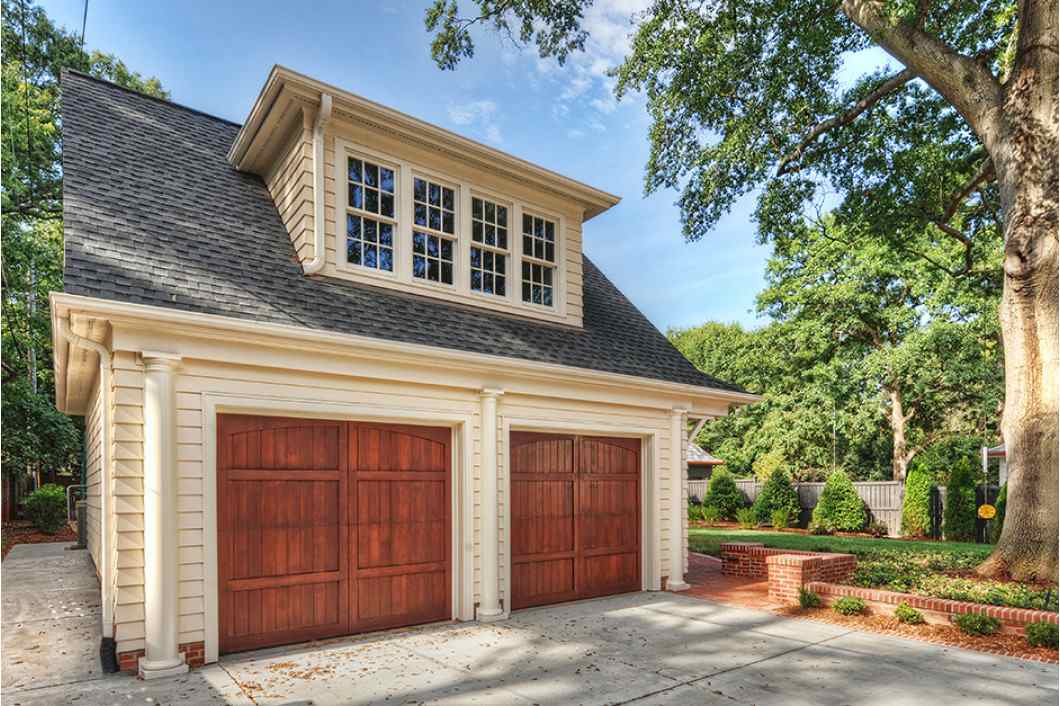
In Charlotte, NC, the carriage house is having a moment again. What began as a structure for horses and tack has evolved into a strategic addition. When you're researching and comparing carriage house costs in Charlotte, NC, the answer depends on scope, site conditions, and long-term goals. We've also included the difference between an Accessory Dwelling Unit (ADU) and a carriage house.
Here is what you can expect in this blog:
-
How Much Does It Cost to Build a Carriage House in Charlotte?
-
What Is the Difference Between an Accessory Dwelling Unit and a Carriage House?
How Much Does It Cost to Build a Carriage House in Charlotte?
If you're researching how much a carriage house costs, you might also be wondering what a carriage house really entails. Below, we've added the cost to build a carriage house and its look-alike cousin, the Accessory Dwelling Unit (ADU).
Here's what you can expect and what you can plan on investing.
Detached Garage with Finished Suite Above
How much does it cost to build a carriage house in Charlotte? A traditional carriage house configuration — garage bays below with living space above — typically costs around $450,000+.
This investment generally includes:
- Two-car garage on the main level
- Private exterior entrance to the upper level
- Fully equipped living quarters with a kitchenette and bathroom
- Exterior materials that complement the primary residence
When you search for "carriage house in Charlotte" or "how much does a carriage house cost to build," this is often the structure you might envision.
Because this type of carriage house includes both functional garage space and a complete dwelling, it represents one of the most versatile property improvements available.
Single-Story Detached Guest House
A single-story detached guest house is technically an Accessory Dwelling Unit (ADU), although many homeowners may still refer to it as a carriage house.
A stand-alone guest house or in-law suite without a garage is typically around $400,000+, depending on size and interior finish level. This space often has a bedroom with a closet, bathroom, and kitchen. It can also include a laundry space.
These detached structures may range from approximately 300 to 1,000 square feet. However, lot size and setback regulations frequently determine allowable footprint before budget becomes the primary consideration.
If you're comparing carriage house cost options, it is important to understand that zoning compliance and site planning significantly influence feasibility.
What Is the Difference Between an Accessory Dwelling Unit and a Carriage House?
The terms are often used interchangeably, but they are not identical and have notable differences for builders.
Understanding the distinction between an ADU and a carriage house is critical for zoning compliance, rental strategy, and long-term planning. When you work with Hopedale Builders, we provide clear explanations of the different types of structures and ensure all the correct permits are in place.
What Is an Accessory Dwelling Unit (ADU)?
An Accessory Dwelling Unit (ADU) is a secondary housing unit located on the same lot as a primary residence.
In Charlotte, an ADU:
- Must meet specific zoning and setback requirements if including a stove or dryer
- Includes a full kitchen and a full bathroom
- Can be attached or detached
- May have square footage limitations depending on lot size
The term ADU is a regulatory classification. It determines how the structure is permitted and how it may be used.
A standalone ADU will likely require more setback restrictions than one built atop a garage. Detached secondary dwellings (including those with above-garage units) now require a separate address from the primary residence. There is a rise in ADUs in Charlotte, but it's important to distinguish them from carriage houses.
What Is a Carriage House?
A carriage house refers to a specific architectural type of detached secondary dwelling.
Historically, the lower level stored horse-drawn carriages, with living quarters above. However, today it is similar to an ADU, except for the garage below and a dryer/stove outlet that would turn it into an ADU.
Today, a carriage house addition typically includes:
- Garage bays on the first level
- A residential suite above, often including a kitchenette
- A separate entrance
- Architectural details that reflect the character of the main home
Every carriage house can function as an ADU if it meets zoning requirements. However, not every ADU takes the form of a carriage house. In Charlotte, some properties simply do not have the lot depth required to support a fully compliant detached ADU. That makes early evaluation essential.
Carriage House vs. ADU Comparison
Below, we've included a graph showing the main differences between the two structures. Take a look and decide which one makes the most sense for your home and your needs.
Your Charlotte Carriage House Builder
Building a carriage house in Charlotte, NC, requires more than adding a detached structure. It demands a clear understanding of zoning regulations, architectural proportion, and how the new space will function in the long term. An experienced builder can define the difference between an ADU and a carriage house, explain what your property allows, and help guide decisions that align with both investment goals and neighborhood standards.
Working with Hopedale Builders
If you're thinking about building a carriage house in Charlotte, NC, explore our process, browse our work, review our cost guide, and learn more about the Charlotte neighborhoods we proudly serve. From detached garage suites to custom additions and full home renovations, Hopedale Builders brings experience, clarity, and disciplined execution to every project, no matter which of our services you choose.
Contact Us
Contact us today to schedule a consultation or learn more about carriage houses.
